
LOUISIANA STATEMesonet
Louisiana's diversity in landscape—from coastal marshes to northern pine forests—requires a spatially balanced network to capture accurate climate data and fill critical coverage gaps.
The initial capital outlay consists of 50 strategically placed mesonet sites.
Our team identified over 100 target areas by collaborating with NWS meteorologists. We narrowed this to 50 candidate locations based on geographic diversity and distance from existing high-quality sensors.
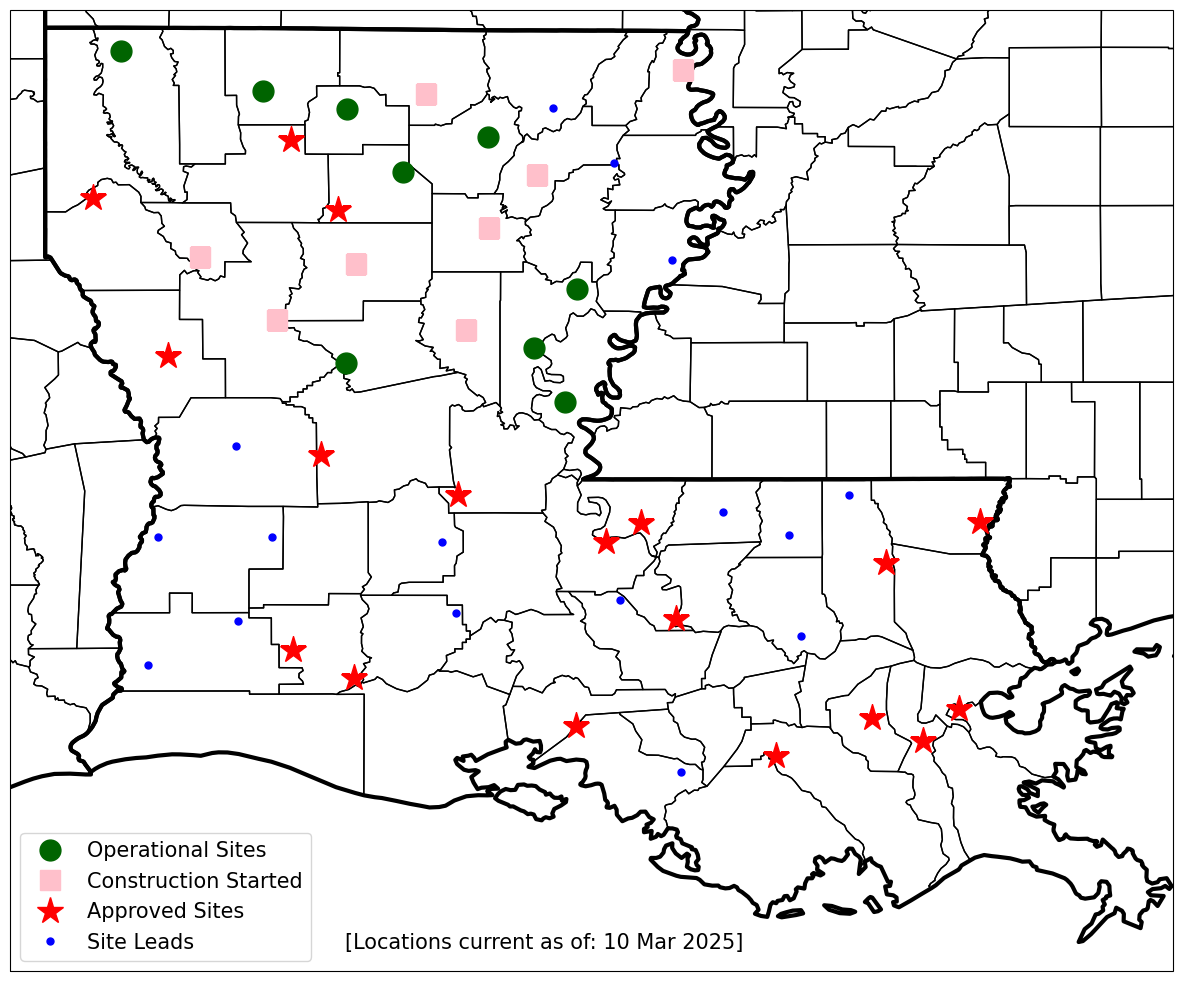
Ref ID: LA-MESO-MAP-V1 // Current Deployment Status
Acceptable for 10-m (30-ft) tower installation, including a 36"x36"x48" cement pad to anchor the tower.
Site must be accessible by truck or short foot path for recurring technical maintenance visits.
Permission to install security or livestock fencing around the site perimeter if dictated by local conditions.
Ground cover must be natural vegetation; at least 30-ft from artificial heat sources, water bodies, or wind obstructions.
30-ft x 30-ft footprint preferred. Variable dimensions considered based on guy wire requirements and site openness.
Infrastructure Independent: No local power or hardline comms required. Solar-powered with cellular data uplink.
Inquiries regarding station deployment, research partnership, or specialized data acquisition should be directed to the ULM Mesonet Team.